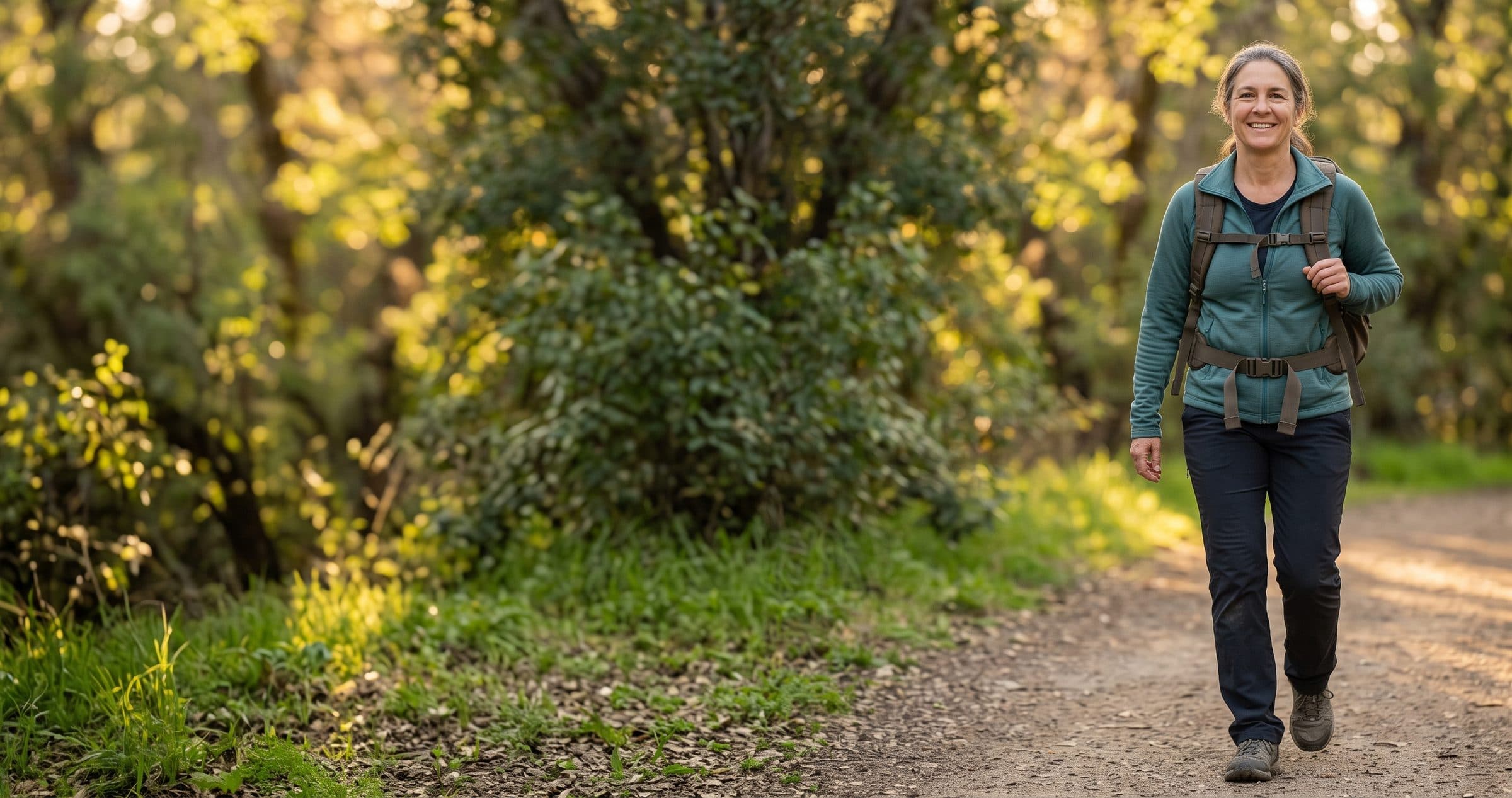
Rucking is about the simplest strength habit there is: put some weight on your back and go for a walk. No gym, no class schedule, no new skills to learn. If you already walk, you already know how to ruck.
You may have heard of rucking from a friend or seen a group of women walking together with packs early on a Saturday. Here's what it is, why so many women are picking it up, how it compares to walking with a weighted vest, and how to start without overdoing it.
What rucking is
Rucking gets its name from the rucksack. It means walking with a weighted pack, usually a backpack loaded with a weight plate, a sandbag or even a few water bottles.
That's it. You walk at your normal pace, on your normal routes, carrying a bit more than usual. The extra weight turns an easy walk into real work for your legs, hips, back and core, without the pounding of running.
A few things make rucking different from other workouts:
- It's low impact. You're walking, not jumping or running.
- It scales to you. You choose the weight, the distance and the pace.
- It fits into your day. Walk the dog, do the school run or meet a friend, just with a pack on.
- It's social. You can talk while you ruck, which is why so many women do it together.
Why women carry: strength, bones and community
Women come to rucking for different reasons. These are the three we hear most.
Strength you use every day
Carrying weight asks your muscles to work harder with every step. Over time, that may help you build strength in your legs, glutes, back and core, the same muscles you use to carry groceries, lift a grandchild, climb stairs or haul a suitcase into an overhead bin.
For many women, especially from midlife on, keeping that everyday strength matters more than any number on a scale. Rucking is a way to train it without learning lifts or booking gym time.
Bones that get a reason to stay strong
Bone responds to load. Research suggests weight-bearing exercise supports bone health, and carrying weight while you walk adds load your bones can respond to. That's one reason rucking and weighted vest walking have caught on with women in perimenopause, menopause and beyond.
The research has real limits, though, and what's right for you depends on your bone density and health history. If you have osteoporosis or osteopenia, talk to your doctor or physical therapist before adding weight.
Community that keeps you going
Ask women why they keep rucking and many will tell you it's the people. A ruck is a walk you can do side by side, at a talking pace, with friends, neighbors or strangers who quickly stop being strangers.
That's the heart of RuckGirl. We started it to give women a simple, social way to carry for themselves and for something bigger. Women walking together, carrying together, showing up for each other.
Rucking vs weighted vest walking
Rucking and weighted vest walking are close cousins. Both add weight to your walk. The difference is where the weight sits.
A rucksack carries weight on your back. It's versatile: you can carry heavier loads as you progress, and the same pack doubles as an everyday bag. The tradeoff is that weight on your back can pull your shoulders back or tempt you to lean forward, so fit and packing matter.
A weighted vest spreads weight around your torso, front and back, closer to your center. Many women find vests feel more balanced, especially at first, and they leave your back free. The tradeoff is that vests are made for one job, and fit varies a lot across women's bodies.
Neither is better across the board. A quick way to think about it:
- If you want to try carrying weight using gear you already own, start with a backpack.
- If you want the most balanced feel, or you're focused on walking at home and around the neighborhood, a vest may suit you.
- If you want to join group rucks and events, a rucksack is the community standard, though vests are welcome.
For a side-by-side look at comfort, posture, fit and cost, read weighted vest vs rucksack: which is right for you?.
Carrying for a cause
Here's the part of rucking we love most: the weight on your back can stand for something.
Carrying for a cause is a rucking tradition. Women carry for a friend going through treatment, in memory of someone they've lost, or to raise money and awareness for an organization that matters to them. Turning a walk into a pledge, so many dollars per mile, gives every step a reason.
That's why our logo is a pack with a heart on it. Carry for yourself. Carry for something bigger.
There are a few ways to do it:
- Carry on your own. Pick a cause, set a mileage goal and share your walks with friends and family who want to support you.
- Join a group ruck. Walk with other women who are carrying for the same cause.
- Host a ruck for your organization. If you're part of a nonprofit, sorority chapter, women's group or workplace, you can bring your people together for a ruck that raises money for your cause. Donations go straight to your organization. See how it works on our host a ruck page.
How to start rucking
You don't need to be fit to start. You need a pack, a little weight, comfortable shoes and the patience to start lighter than you think you need.
- Check in with your doctor or PT first if you have osteoporosis or osteopenia; bone, joint, heart or pelvic floor concerns; or if you're pregnant or postpartum.
- Find your starting weight. Our weight calculator gives you a starting point based on your body weight and fitness. Most women are surprised how little it suggests, and that's on purpose.
- Pack it right. Keep the weight high and snug against your back. Tighten the straps so nothing bounces.
- Walk tall. Stand upright, keep your shoulders relaxed and your eyes ahead. If you find yourself leaning forward to cope with the load, it's too heavy for now.
- Build slowly. Add time before you add weight, and add weight in small steps. Your muscles adapt faster than your joints and connective tissue, so slow progress is safe progress.
- Listen to your body. Stop or lighten up if you feel sharp pain, pain that changes how you walk, pelvic heaviness, dizziness or chest discomfort.
If you'd like a plan to follow, our free 4-week plan walks you through it week by week, with coaching emails along the way.
Ready to carry?
Rucking asks very little: a pack, a walk and a little weight. In return, it may help you get stronger, give your bones something to respond to and connect you with women who'll walk beside you.
Start with our free 4-week plan, or head back to Start Here for everything you need to begin.