Most weighted vest problems aren't about the vest itself. They come from starting too heavy, wearing it too low or too loose, or wearing the wrong thing underneath. The good news: almost all of them are quick to fix.
We read more than a thousand reviews of popular weighted vests while planning our Gear Lab tests. The same few complaints came up again and again, especially from women: weight pressing on the chest, straps digging into collarbones and shoulders, bouncing, and rubbing under the arms. Here's how to avoid each one.
Start lighter than you think
The most common cause of a sore neck or shoulders is simply too much weight, too soon. A vest that feels fine for five minutes can feel very different after thirty.
- Find your starting weight first. Our weight calculator suggests a range for your body weight, fitness and age. Most women start at about 5–10 lb.
- If you're between two weights, choose the lighter one. You can always add more.
- Change one thing at a time. Add a little weight or a little time, never both in the same week.
How to put on a weighted vest
- Put it on standing up, with your shoulders relaxed and down.
- Fasten the front first.
- Snug the side straps so the vest hugs your body. It should feel close but let you breathe in fully.
- Walk for a minute and check. If anything slides, presses or bounces, adjust now rather than putting up with it for the whole walk.
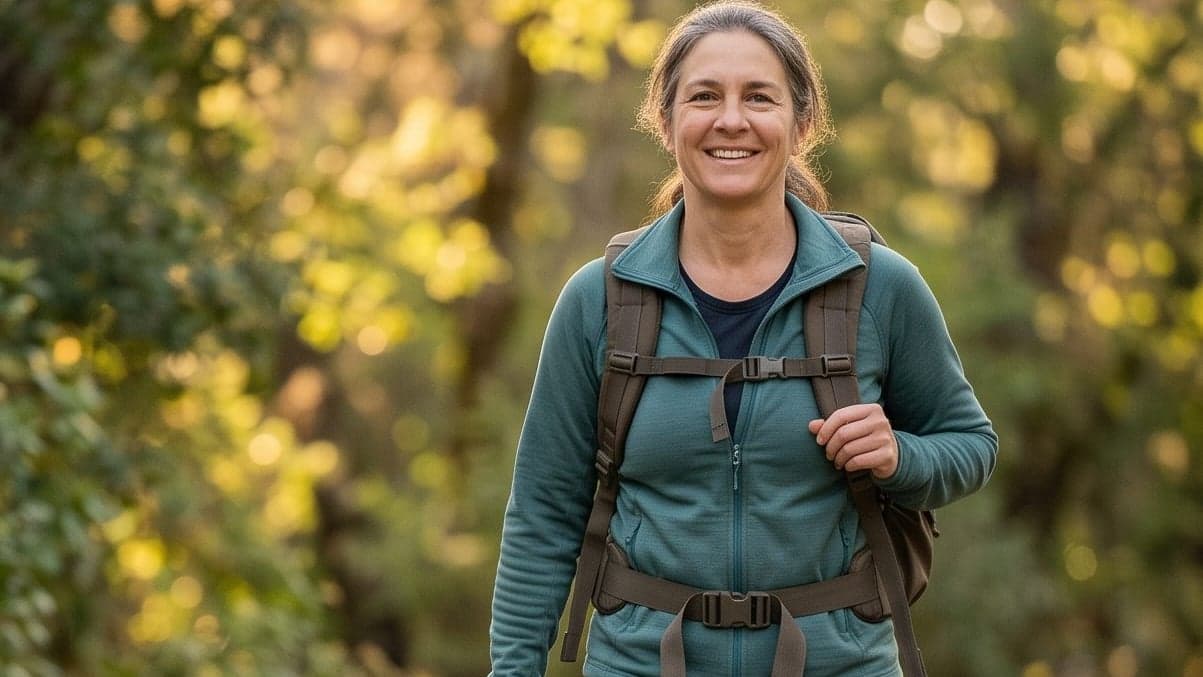
Using a backpack instead? Tighten in this order: hip belt (if it has one), then shoulder straps, then the chest strap. The weight settles where it should, and your shoulders do less of the work.
Where it should sit
A weighted vest should sit high and close, like a well-fitted jacket.
- The weight moves with you. If you feel it swinging or thumping as you walk, it's too loose or sitting too low.
- The front sits above your bust, not on it. If the front panel or a strap presses on your chest, raise the shoulder straps or try a vest with a slimmer front.
- Your posture stays tall. Eyes ahead, shoulders down and relaxed, arms swinging naturally. If the vest pulls you forward or makes you hunch, it's too heavy or sitting wrong.
What to wear under a weighted vest
- A fitted top with sleeves. Laces, side ties and plastic loops can rub or scratch bare arms. Sleeves solve it.
- A sports bra with wide, smooth straps. A racerback or cross-back style spreads the pressure from vest or pack straps. Thin straps tend to dig in.
- Darker colors at first. Some new vests transfer dye onto light tops, especially when you sweat.
- Layers in cold weather. A thin layer under the vest and your warm layer on top, so you can unzip as you warm up. A vest worn over a puffy jacket shifts and bounces.
Fix it fast
If you notice one of these, try the fix before your next walk.
- It presses on your chest. Raise the shoulder straps so the front sits above your bust, try a slimmer front panel, or switch to a backpack for now.
- It digs into your collarbones. Raise or loosen the front slightly so the top edge sits below them, or add soft padding under the edge. If it still digs in, the vest may not suit your shape.
- Your shoulders or neck ache. Lighten the load, pull the weight higher and closer, and use a waist or side strap if you have one.
- It bounces. Tighten every strap and fill any gaps. Bouncing weight is harder on your back and more tiring.
- It rubs under your arms or straps. Wear a fitted top with sleeves and a bra with smooth straps. Anti-chafe balm helps.
- Your lower back aches. Move the weight higher, carry less, and take slightly shorter steps.
- It won't close, or it's far too big. Sizing varies a lot between brands. Check the brand's chest measurement, not just S, M or L, and exchange it rather than forcing it.
Know when to stop
Tired, warm muscles are normal. Sore joints are not. After each walk, check in with your body:
- Green, keep going: muscles feel tired or warm, and any soreness fades within a day.
- Yellow, ease off: tight shoulders or neck, straps rubbing, or soreness into a second day. Next walk, go lighter, shorter or slower.
- Red, stop and get advice: sharp or worsening joint pain; numbness or tingling; dizziness, chest pain or unusual breathlessness; pelvic heaviness, pressure or leaking; or pain still there two days later. Stop, rest, and talk to your doctor or a physical therapist before you carry weight again.
If you're pregnant or postpartum, or have osteoporosis, osteopenia, or back, hip, knee or pelvic floor concerns, talk to your doctor or physical therapist before you add weight.
Still shopping for a vest?
We're fit-testing vests on women's bodies, including petite, full-bust and larger sizes, and our reviews will appear in the Gear Lab. Until then, a backpack you already own is a comfortable, free way to start. Rucking for women explains how, and our free 4-week plan shows you how to load it and build up week by week.