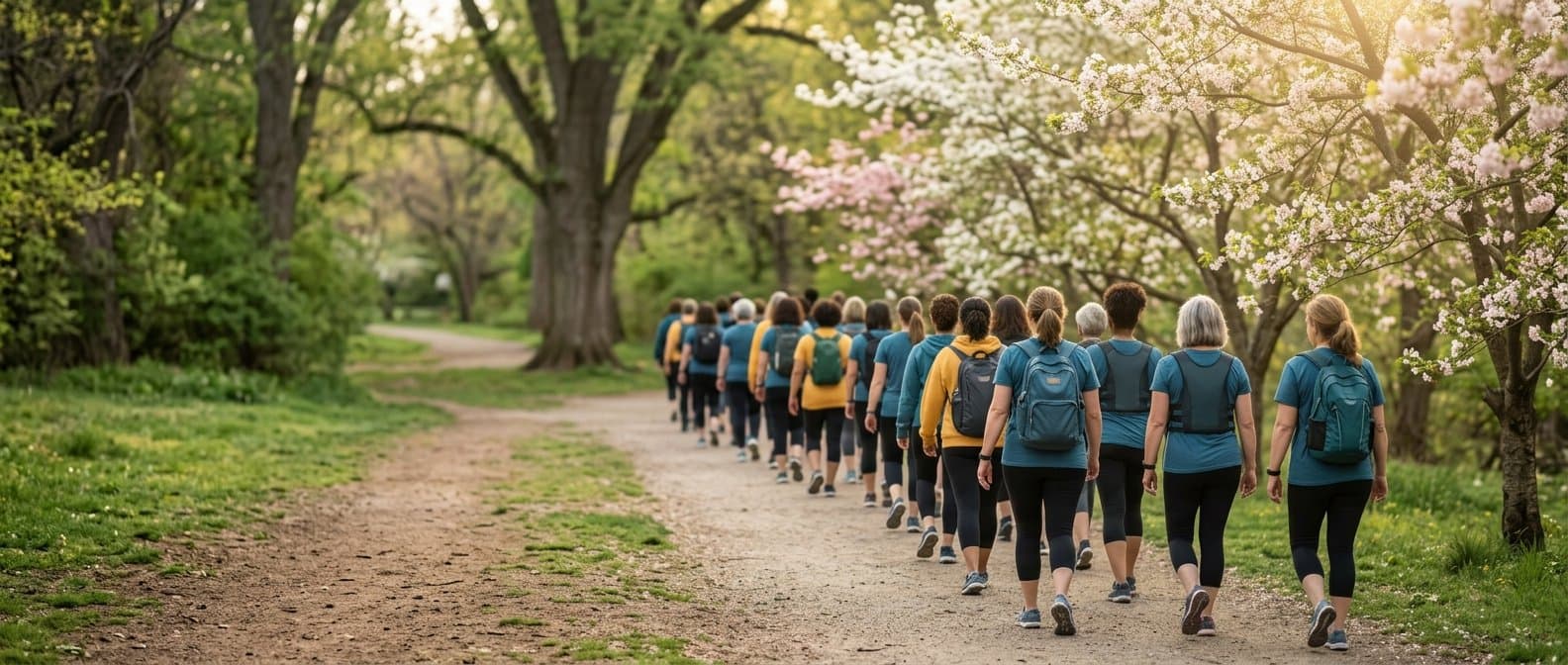
Walking for a cause is one of the simplest ways to turn something you already do into something bigger. You walk, the people who care about you give, and the money goes to an organization that matters to you. Do it with a group and it becomes a day your members remember.
This guide is for anyone planning a fundraising walk: a women's group, a nonprofit, a sorority chapter, a church group or a team at work. It covers how the money works, the formats to choose from and a simple plan from first idea to walk day.
What walking for a cause means
Walking for a cause means walking to raise money or awareness for a cause. It can look like:
- One woman with a goal, walking for a friend in treatment and sharing her walks with the people who want to back her.
- A walkathon, where walkers collect pledges for walking a set route on one day.
- A group challenge, where members walk on their own or in small groups for a few weeks, then finish together at a group walk.
At RuckGirl, many women carry a little weight while they walk: a backpack or a weighted vest. We call it carrying for a cause. It's optional, but it gives the walk a visible "carry" that people remember. New to it? Read rucking for women first.
How a charity walk raises money
People often ask where the money on a charity walk actually comes from. Mostly, it comes from the people around each walker.
- Each walker shares her reason. Why this cause, and why it matters to her.
- Supporters give. They donate a set amount, or pledge an amount for every mile she walks.
- The money goes to the organization, through a giving page set up in its name.
Some walks add a registration fee for walkers, or ask a local business to sponsor the day. Many use all three.
Pick a cause your group cares about
The walks that raise the most tend to have a cause the walkers feel close to. A few ways in:
- A cause your group already supports, such as your nonprofit's own mission or your chapter's philanthropy.
- A cause close to your members, such as cancer support, a women's shelter, bone health, girls' mentoring or women veterans.
- A local organization, where walkers can see the difference the money makes.
Talk to the organization before you start. They can tell you how they'd like to receive donations, whether they have a giving page you can use and what they'd like you to say about their work.
Choose a format
A one-day walk is the classic. Everyone meets, walks a route together and celebrates at the finish. It's easy to explain and great for photos, but most of the fundraising happens in the last few days.
A multi-week challenge that ends in a group walk gives walkers more time to share their progress and ask for support. Each walk they post is a fresh reason for friends to give. It also gives new walkers time to build up gently before the big day.
Carry or no carry. Walkers can carry a backpack or a weighted vest if they'd like to, or walk without one. If they carry, the rule is the same as any walk: start lighter than you think. Our weight calculator suggests a starting range, and how to start rucking covers the basics.
A simple plan, start to finish
A couple of months out
- Agree on the cause, the format and the date with the organization.
- Pick a route that the least experienced walker in your group can finish, with a shorter loop for anyone who wants it. Look for restrooms, shade and a good meeting spot.
- Check whether you need permission to use a park or path for a group, and ask the organization about waivers and insurance.
- Set up the giving page in the organization's name.
A few weeks out
- Invite walkers and ask each one to set a personal goal.
- Give walkers words to share: a short note about the cause and the link to give. Many people find asking for money awkward, and a ready-made message helps.
- Ask a local business to sponsor water, snacks or the finish line.
Walk week
- Share a reminder with the meeting time, the route and what to bring: water, comfortable walking shoes and layers.
- Plan a check-in table with water and a sign-in sheet.
- Ask a volunteer to walk at the back so no one walks alone.
After the walk
- Thank everyone, walkers and supporters alike.
- Share the total and a few photos, with permission from the people in them.
- Ask the organization to say what the money will do. It's the best way to bring people back next year.
Keep it safe and welcoming
A fundraising walk works best when everyone finishes feeling good.
- Set an easy, talking pace. Walk with the slowest walker, not ahead of her.
- Ask anyone with a health condition to check first. Talk to your doctor or physical therapist before training if you have osteoporosis or osteopenia; bone, joint, heart or pelvic floor concerns; or if you're pregnant or postpartum.
- Know the stop signals. Anyone who feels sharp pain, pain that changes how they walk, pelvic heaviness, dizziness or chest discomfort should stop and rest.
- If walkers carry weight, keep it light. Start lighter than you think. A walk day isn't the day to try a heavier load.
Host a ruck with RuckGirl
Planning all of this yourself is very doable. If you'd rather start from a ready-made plan, we built one: a 4-week walking challenge that ends in a group ruck, for nonprofits, women's groups, sororities and employers. There's a free starter kit, and donations go straight to your organization. See how it works on our host a ruck page.
We started RuckGirl to give women a simple, social way to carry for themselves and for something bigger. A walk for a cause is that idea at its best.
Your next step
Walking for a cause starts with being ready for the walk. Our free 4-week plan helps you build up gently, so you'll be ready to walk with your group.