A treadmill is one of the easiest places to walk with a weighted vest. It's warm, dry and lit, it's there on dark winter evenings, and you can stop the moment you want to. A few things change when you add weight, though, and they're worth getting right before your first walk.
This guide covers setting up, how the vest should fit, the handrail question, adding incline and when to stop. It works the same if you carry a backpack instead of a vest. New to carrying weight? Start with how to start rucking, then come back here.
Before you step on
- Find your starting weight. Our weight calculator suggests a range for your body weight, fitness and age. If you're between two options, choose the lighter one.
- Put the vest on before you get on the belt, standing tall with your shoulders relaxed. Fasten the front, then snug the side straps.
- Clip on the safety key. Attach it to your clothing, not the vest's straps, so it pulls free if you slip.
- Keep water within reach. Indoors you may warm up faster than you expect, especially with a vest on.
- Wear your walking shoes and a fitted top with sleeves, so straps don't rub your arms.
How to start the belt
- Stand with a foot on each side rail, not on the belt.
- Start the belt at its slowest speed.
- Hold the rails lightly and step on, then let go once you feel steady.
- Raise the speed gradually to an easy pace: brisk enough to feel like a walk, slow enough that you could chat.
To finish, slow the belt right down before you stop it, and step off onto the side rails. Take the vest off once you're on the floor, not on the belt.
How it should feel
A good treadmill walk in a vest should feel like a normal walk that's a little harder work.
- Your stride stays the same. If the weight makes you shuffle, take short choppy steps or lean forward, it's too heavy for now.
- You stay tall. Eyes ahead, shoulders down, arms swinging naturally.
- The vest moves with you. No swinging or thumping. If it bounces, tighten it or sit it higher.
- You can still talk. If you can't speak a full sentence, slow down.
Treadmills can feel different from the pavement. Some women find their first few minutes a little wobbly. That's normal, and it settles quickly.
The handrail question
It's tempting to hold on, especially with weight on. A light touch while you find your balance is fine. Once you're steady, let go.
Leaning on or hanging from the rails takes the weight off your legs and pulls you into a hunch, so your shoulders and back end up doing the work instead. Letting your arms swing also helps your balance.
If you need the rails to stay steady, that's a sign to go lighter or slower for now, not to hold on harder. If you have balance concerns, talk to your doctor or physical therapist about whether a treadmill is right for you.
Adding incline
Incline makes a walk harder without making it faster, and it can feel a lot like walking up a gentle hill. With a vest on, it adds up quickly.
- Walk flat first. Get used to the vest on a level belt before you tilt it.
- Add a little at a time. A small rise is plenty to start.
- Change one thing at a time. Add a little weight, a little time or a little incline, never more than one in the same week.
- Don't hold on to make it possible. If you need the rails to walk at an incline, lower it.
You may have seen steep treadmill challenges online. With a vest, they're a big jump. Build up slowly, and keep the vest for walking: we don't recommend running in one.
Our free 4-week plan shows you how to build up week by week, indoors or out.
Know when to stop
Slow the belt and step off, then talk to your doctor or physical therapist before you carry weight again, if you notice:
- sharp pain
- pain that changes how you walk
- pelvic heaviness or pressure
- dizziness
- chest discomfort
Tired, warm muscles are normal. Sore joints are not.
If you have osteoporosis or osteopenia; bone, joint, heart or pelvic floor concerns; or you're pregnant or postpartum, talk to your doctor or physical therapist before you start. Our Health Hub looks at what carrying weight may help with and what it can't do.
Vest or backpack?
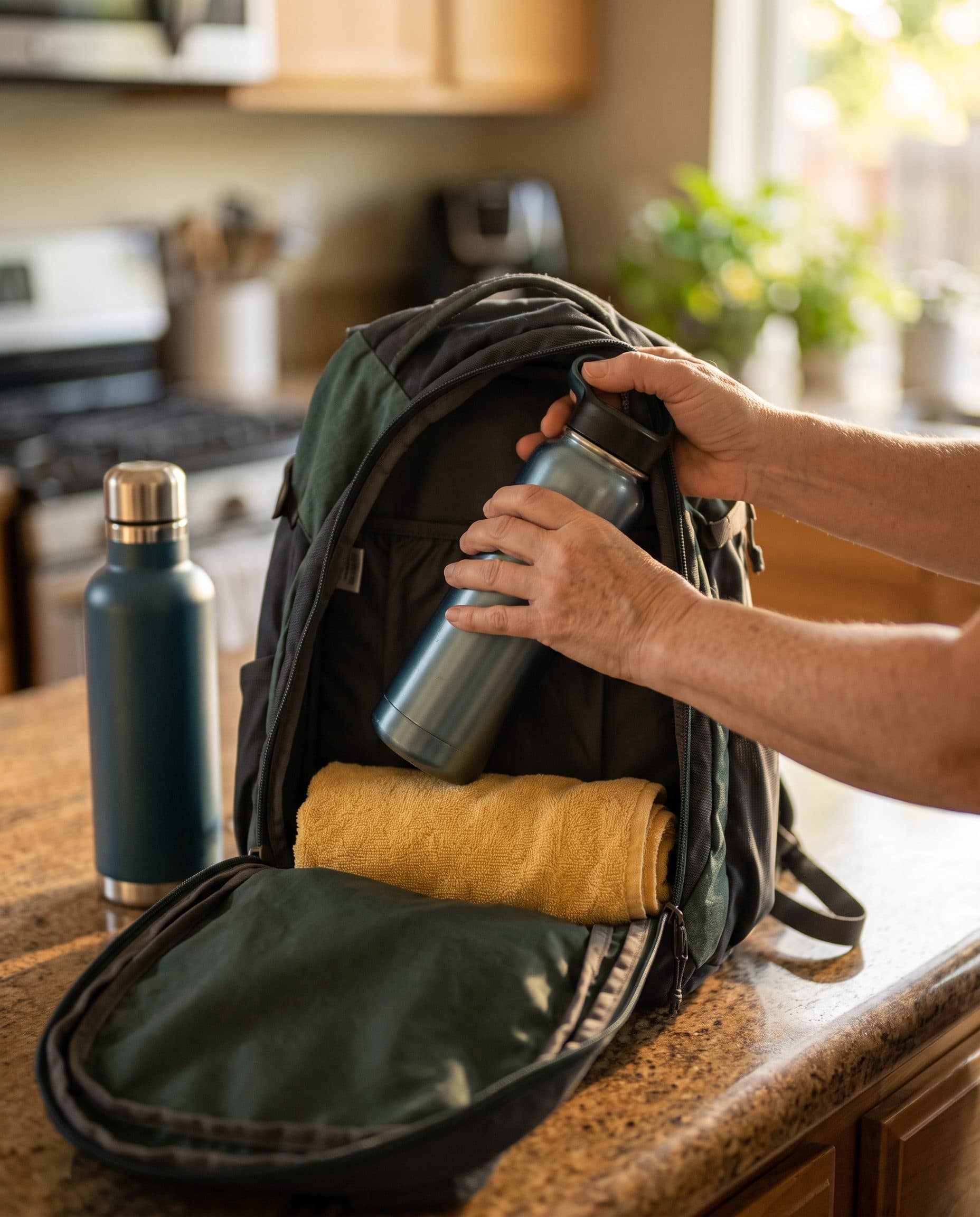
Everything here works with a backpack too. A pack you already own is a free way to start, and you can load it lighter than most vests. If you're deciding which to buy, our weighted vest vs rucksack guide compares the two.
Take it outside when you can
A treadmill keeps you going through the dark months. Walking outside with friends is where rucking gets social: same talking pace, side by side, often for a cause. If you're part of a nonprofit, women's group or workplace, you can host a ruck for your cause. Donations go straight to your organization.
Ready for your first walk?
Find your starting weight with our weight calculator, then follow the free 4-week plan. It works on a treadmill just as well as on the sidewalk.