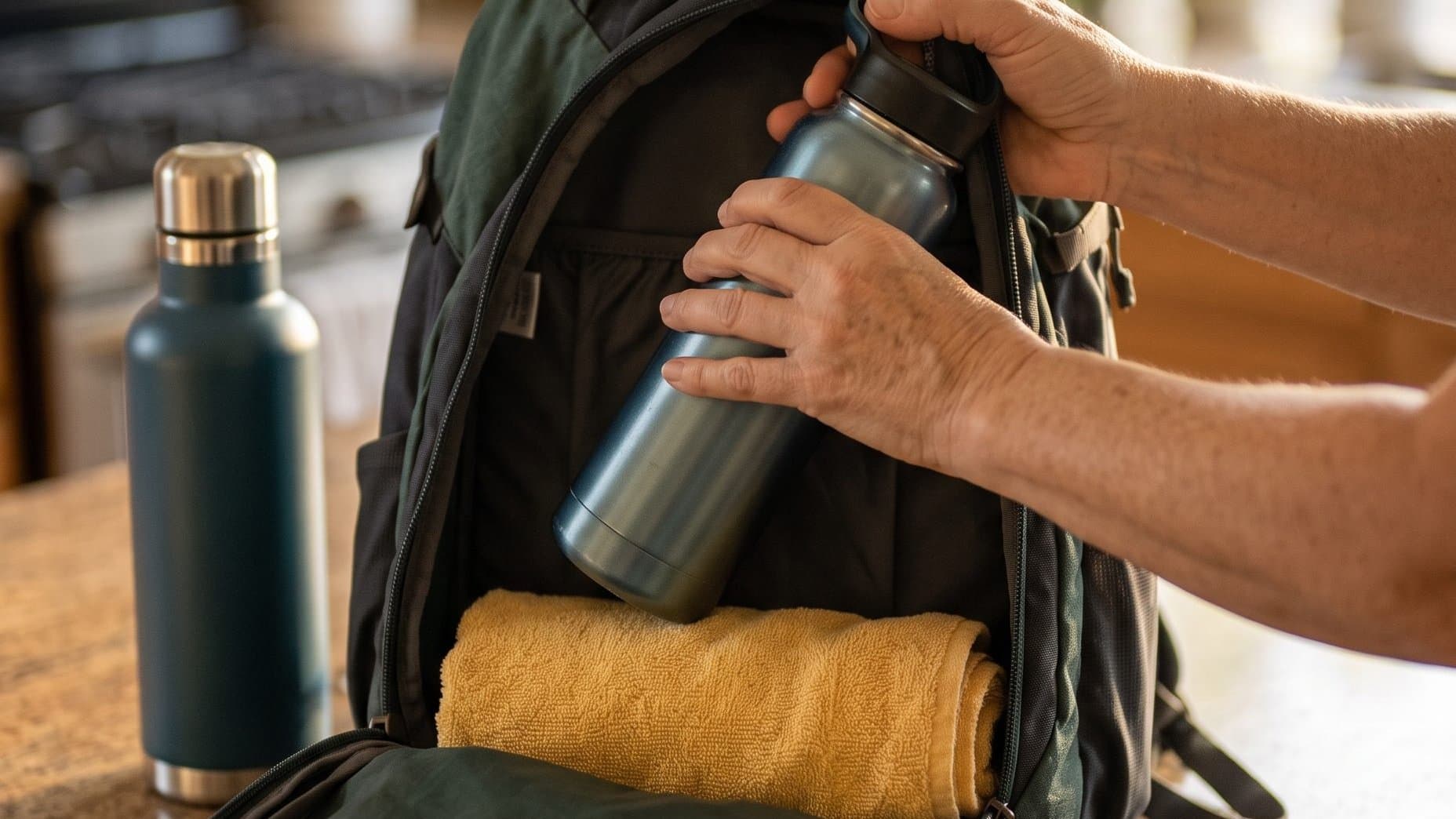
Rucking is walking with weight on your back. That's the whole idea. You put a little weight in a sturdy backpack and go for the walk you'd take anyway.
If you've just heard the word from a friend, or spotted a group of women walking with packs on a Saturday morning, this guide explains what rucking is and where the name comes from. It also covers how rucking compares to walking, hiking and running, and how to try it this week.
Rucking, in one line
Rucking means walking with a loaded pack. The pack is usually an ordinary backpack. The load can be a weight plate made for rucking, a sandbag or things you already have at home, like water bottles or books.
You don't walk faster or farther than usual to make it rucking. You walk at a comfortable pace, often a pace where you can still chat, and let the extra weight make the walk more work.
Where the word comes from
The name comes from rucksack, an old word for a backpack. It's borrowed from German, where Rücken means back.
Soldiers have carried loads on foot for a very long time, and that's where the word "ruck" picked up its meaning. Today, rucking is an everyday habit for all kinds of people. You'll find women rucking around the neighborhood, on walking pads at home, on school runs and at charity walks. No uniform or background required.
How rucking differs from walking, hiking and running
Rucking sits somewhere between a walk and a workout.
- Walking: rucking is walking, with one change. The weight on your back asks more of your legs, hips, back and core with every step. We compare the two in rucking vs walking.
- Hiking: hiking is about the trail. Rucking is about the load, and you can do it anywhere: a sidewalk, a park, a track or a treadmill.
- Running: rucking keeps you walking, so there's no jumping or pounding, and many women find it easier to fit into their week. See rucking vs running for the full comparison.
What you need
Less than you think. To try rucking, you need:
- A sturdy backpack with padded shoulder straps. A chest or hip strap helps.
- A little weight from around the house: water bottles, a few books or a bag of rice, packed so it doesn't shift.
- Comfortable walking shoes that you've already worn on walks.
That's enough for your first walks. Some women later move on to a rucking pack with a weight plate, and some prefer a weighted vest, which spreads the weight around your torso instead. Neither is better across the board. Our guide to weighted vests vs rucking helps you choose.
Why women ruck
Women come to rucking for different reasons. These are the ones we hear most.
- Everyday strength. Carrying weight on your walks may help build strength in your legs, hips, back and core: the muscles you use for groceries, stairs and grandkids.
- Bones. Research suggests weight-bearing exercise supports bone health, which is one reason rucking has caught on with women in perimenopause, menopause and beyond. The research has real limits, though, so if you have osteoporosis or osteopenia, talk to your doctor or physical therapist before adding weight.
- Company. You can talk while you ruck. That makes it an easy habit to share with a friend or a group.
- A cause. Many women carry for something bigger: in honor of someone, or to raise money for an organization they care about.
We go deeper into all of this in rucking for women: why carry weight.
Rucking words you'll hear
A few terms come up again and again once you start.
- Ruck: a walk with a loaded pack. "Want to ruck on Saturday?"
- Rucksack or pack: the backpack you carry the weight in.
- Ruck plate: a flat, dense weight made to sit upright in a pack's weight pocket, close to your back.
- Load: how much weight you're carrying.
- Weighted vest walking: the close cousin of rucking. The weight sits in a vest around your torso instead of on your back.
- Ruck club: a group that meets to ruck together.
- Carry for a cause: rucking to raise money or awareness for an organization or a person you care about.
How to try it
You can try rucking this week with what you already have.
- Check in first if you need to. Talk to your doctor or physical therapist before you start if you have osteoporosis or osteopenia; bone, joint, heart or pelvic floor concerns; or if you're pregnant or postpartum.
- Find your starting weight. Our weight calculator gives you a starting range based on your body weight and fitness. Start lighter than you think.
- Pack it high and snug. Keep the weight close to your back and tighten the straps so nothing bounces.
- Walk a route you know, at a pace where you can still talk.
- Stop or lighten up if you feel sharp pain, pain that changes how you walk, pelvic heaviness, dizziness or chest discomfort.
For a step-by-step first walk, read how to start rucking.
Ready to try it?
Rucking is a walk with a little weight on your back. It asks for nothing you don't already have, and it's easy to share.
Start with our free 4-week plan, or head to Start Here for everything you need to begin.