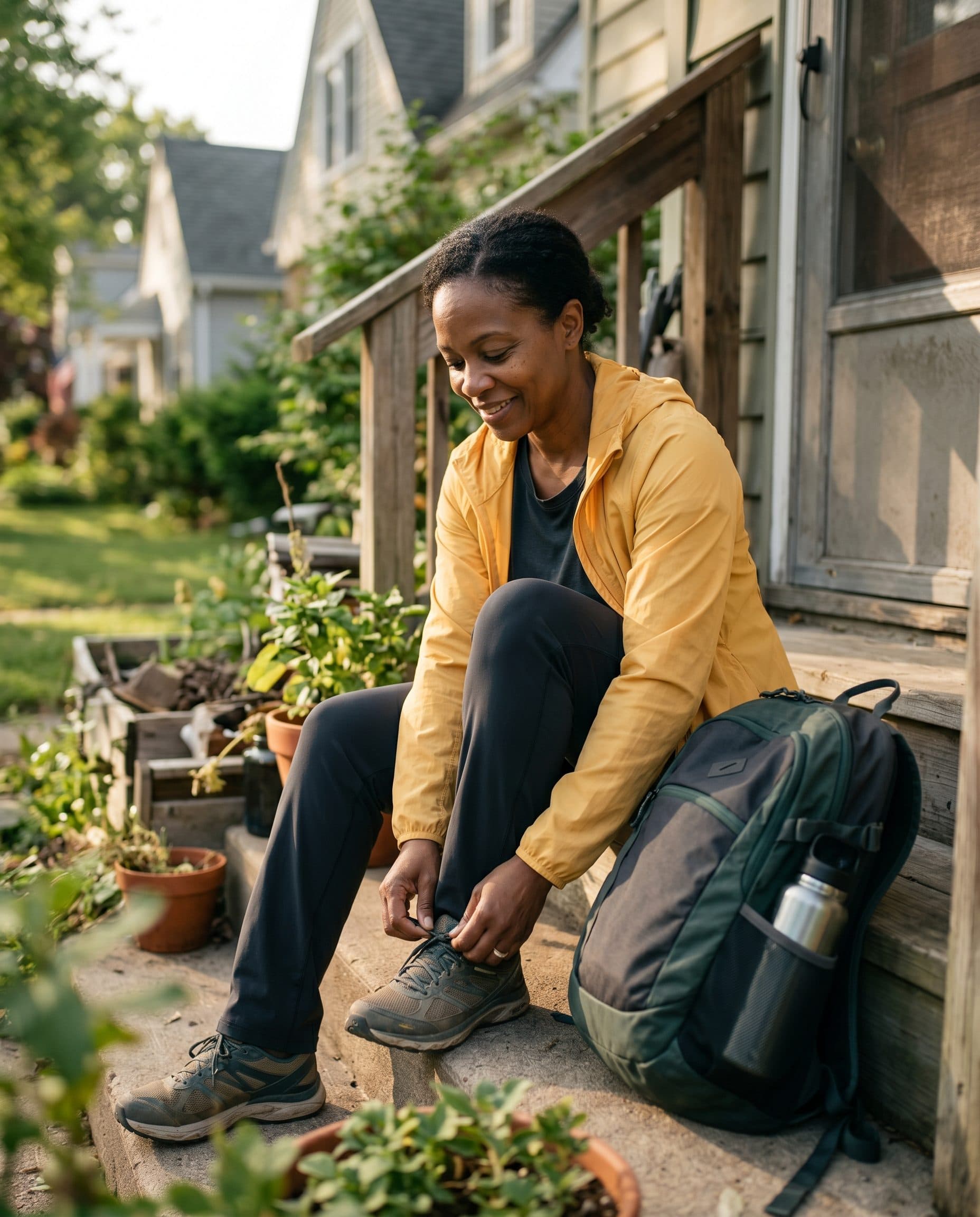
Good news first: you probably own most of what you need. Rucking and weighted vest walking are walking, with a little more to carry. You don't need boots, tactical clothing or a whole new wardrobe.
What does change is where things press and rub. A pack or vest adds weight to your feet, and its straps sit on your shoulders, chest and sides. So a few choices matter more than they do on an ordinary walk: your shoes, your socks, your sports bra and the layer under your straps.
This guide covers what to look for in each, and what you can use from your closet today. We're fit-testing vests and packs on women's bodies in our Gear Lab, so we don't name products here yet.
Rucking shoes: what to look for
The best shoes for rucking are the ones that feel steady under you with a bit of extra weight. For most women, that's a walking shoe or a trail shoe, not a boot.
Before your first walk, check the shoes you already have:
- A firm heel. Squeeze the back of the shoe. If it folds flat easily, it won't hold your foot steady once you add weight.
- A sole that doesn't twist. Hold the shoe at both ends and twist gently. A little give is fine; a shoe that wrings out like a towel is too soft for carrying.
- Room for your toes. You should be able to wiggle them. Feet can swell a little on longer walks, so a snug shoe can start to pinch partway through.
- Grip for your route. Sidewalks and park paths are fine in most walking shoes. Gravel, mud and wet leaves call for a deeper tread.
- Plenty of life left. Look at the soles and the inside of the heel. If the tread is smooth or the cushioning feels flat, it's time for a new pair.
Shoes you already walk in, and already know are comfortable, are a better start than a brand-new pair. If you do buy new, try them on later in the day, wear the socks you'll walk in and break them in on a few ordinary walks before you add weight.
Do you need boots for rucking?
Usually not. A lot of rucking advice comes from military training, where boots are standard. For walking on paths, sidewalks and park trails, most women find walking or trail shoes lighter and easier.
Boots can make sense if you walk rocky, steep or very muddy ground, or if you already like the feel of ankle support. Choose for the routes you actually walk.
Shoes for weighted vest walking
The same rules apply to a vest as to a pack. If you walk indoors, the cushioned sneakers you use for the treadmill are fine, as long as they feel stable. Our guide to using a weighted vest on a treadmill covers the rest of that setup.
Socks: skip the cotton
Socks are the cheapest way to make your walks more comfortable. Extra weight means a bit more pressure and friction on your feet, and that's where blisters start.
- Choose wool or synthetic walking socks. Cotton holds sweat against your skin. Wool and synthetics stay drier.
- Look for a smooth fit. No loose fabric, bunching or thick seams across your toes.
- Pick a height above your shoe. Socks that sit above the collar of your shoe stop it rubbing your ankle.
- Deal with hot spots early. If you feel a rub starting, stop and fix it. A bandage or blister patch on a warm spot works far better than one on a blister.
Sports bras for rucking and weighted vests
This is where a pack or vest feels very different for women. Straps cross your chest and shoulders, and the front panel of a vest can sit on your bust.
- Wide, smooth straps. Thin straps dig in under the weight of pack or vest straps.
- A racerback or cross-back style. It spreads the pressure across your upper back instead of one line on each shoulder.
- Nothing hard on your back. Clips, hooks and thick seams can press uncomfortably under a pack. Front-zip or pull-on styles avoid this.
- Support you'd wear for a brisk walk. You don't need the most supportive run bra you own, but a light everyday bra may not feel secure with a vest on top.
If your vest still presses on your chest, the fix is usually the vest fit, not the bra. Our guide to how to wear a weighted vest without pain shows where it should sit and how to stop chest, shoulder and collarbone pressure.
Your top layer: sleeves under straps
Whatever goes on top, wear something fitted with sleeves under your straps. Bare skin and loose fabric both rub where straps sit, especially under your arms. A top that wicks sweat feels better than cotton once you warm up.
Some new vests and dyed pack straps can transfer color in the first few walks, so a darker top is a safe choice until you know.
Dressing for the weather
If you join our free plan's January group, cold, wet and dark mornings are part of the deal. A few simple habits help:
- Layer thinly. You warm up fast once you're carrying. Start with thin layers you can take off and stash in your pack.
- Get the order right. With a vest, wear a thin layer under it and your warm layer or jacket on top, so you can unzip as you warm up. A vest over a puffy coat shifts and bounces. With a pack, your jacket goes under the straps.
- Keep your hands and head warm. A hat and gloves make a big difference and pack small.
- Be easy to see. If you walk before sunrise or after dark, wear something bright or reflective, and choose well-lit routes.
- Plan for rain. A light waterproof jacket and quick-drying layers beat a heavy coat. Put your phone and spare layer in a bag inside your pack.
In warm weather, it's the reverse: light, breathable layers, a hat, sunscreen and plenty of water. Our guide to how to start rucking covers what to pack for your first walk, and our guide to weighted vest vs rucksack helps if you're still choosing how to carry.
When your kit isn't the problem
Most aches in the first few weeks come from carrying too much too soon, not from the wrong shoes. Start lighter than you think, and our guide to how to use a weighted vest covers the other common beginner mistakes.
Stop, take the weight off and talk to your doctor or physical therapist before you carry on if you notice:
- sharp pain
- pain that changes how you walk
- pelvic heaviness or pressure
- dizziness
- chest discomfort
Carry together
The best kit tip of all may be a friend to walk with. Many women carry for a cause, in honor of someone or to raise money for an organization they care about. Our guide to walking for a cause shows how a group fundraising walk works, and if you're part of a nonprofit, women's group or workplace, you can host a ruck for your cause. Donations go straight to your organization.
Ready for your first walk?
Lace up the shoes you already own, then find your starting weight with our weight calculator. The free 4-week plan starts with no added weight and builds one small step a week.